Insurance and Safety for Kitchen Cleaning Services
 Kitchen cleaning operations demand a clear, documented approach to insurance and staff safety. Whether you provide domestic kitchen cleaning or intensive commercial kitchen cleaning, having appropriate cover and robust safety procedures is essential to protect clients, employees and the business. This page explains our approach to public liability insurance, workforce training, personal protective equipment and the step-by-step risk assessment process that underpins safe kitchen sanitisation and hygiene work.
Public liability insurance is the foundation of responsible kitchen hygiene services. Public liability cover protects against third-party claims for accidental damage or injury arising from cleaning activities in kitchens, from slippy floors after mopping to damage to appliances during deep kitchen cleaning. Policies are selected to reflect the scale of operations, the types of premises served and the potential cost of claims. We recommend coverage limits that are appropriate for both small domestic kitchens and high-risk commercial kitchens where exposures are larger.
 Training and competence are equally critical. Staff working in kitchen cleaning roles must be trained in safe cleaning methods, correct use of detergents and disinfectants, and the handling of greasy residues and biological contaminants. Training programmes vary between domestic kitchen cleaning and food-service environments: the latter requires additional modules on cross-contamination prevention, food safety standards and working around sensitive equipment.
Staff Training, Certification and Practical Safety Measures
Every operative receives a documented induction and ongoing refresher courses. Topics covered include chemical safety, safe use of mechanical cleaning tools, waste disposal procedures and emergency response. Training records are retained and updated to show that employees are qualified for tasks from routine kitchen degreasing to intensive oven and extractor cleaning. Competency records are part of our quality assurance and are regularly audited.
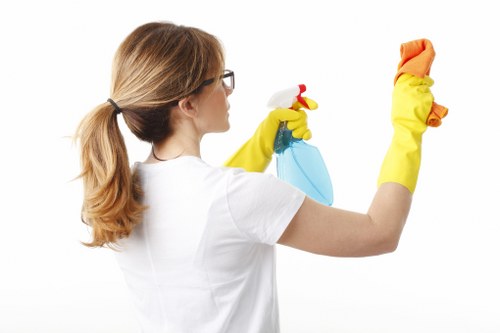
 Personal protective equipment (PPE) is mandatory for kitchen cleaning teams. PPE reduces exposure to corrosive cleaners, hot surfaces and slip hazards. Typical PPE for kitchen services includes:
- Gloves: chemical-resistant and heat-resistant options
- Aprons and coveralls: to prevent contamination and protect clothing
- Non-slip footwear: to reduce fall risk on wet or greasy floors
- Eye protection and face shields: where splashes or steam are possible
Clear labeling and safety data sheets (SDS) accompany all cleaning agents used in professional kitchen cleaning. Employees are trained to consult SDS before use, understand dilution rates, and apply correct storage practices. Safe chemical management reduces the risk of accidental exposure and supports compliance with occupational health regulations and food safety codes.
Risk Assessment Process and Operational Controls
The risk assessment process for kitchen sanitation begins with a site survey. Assessors document hazards such as hot surfaces, electrical appliances, grease-laden ventilation, and trapped spaces where residual food matter accumulates. Each identified hazard is rated for likelihood and consequence to determine the level of control required. Controls range from administrative actions and additional PPE, to changes in cleaning methods or the scheduling of tasks outside peak business hours to minimise disruption.
 Risk control measures are practical and measurable. We use checklists to confirm that floor signage is in place when surfaces are wet, that electrical isolations are verified before deep cleaning of cookers, and that ladders or platforms are secured for high-level cleaning. Supervisors sign off on permits-to-work for any non-routine or high-risk activities in commercial kitchens. These permits form part of the documented audit trail that links training, PPE provision and insurance coverage.
 Incident reporting and continuous improvement close the safety loop. All accidents, near-misses and unintended contaminations are recorded, investigated and used to refine procedures. When an incident could lead to third-party loss or injury, the public liability policy details the claims process and required documentation; having a clear incident file with training and risk assessment records expedites any legitimate claim and demonstrates compliance.
Maintaining high standards in kitchen cleaning means integrating insurance, training, PPE and risk assessment into everyday practice. Public liability insurance provides financial protection, but it works best alongside proactive controls: competent staff, up-to-date safety equipment, and a transparent, repeatable risk assessment process. By combining these elements we reduce the likelihood of incidents and ensure prompt, documented responses when events occur.
For commercial premises undertaking large-scale kitchen sanitisation, additional insurance endorsements and higher indemnity limits are often necessary. This is why pre-engagement surveys consider the nature of the kitchen ??? from light domestic clearing to full-scale extractor and duct cleaning ??? and tailor both safety plans and insurance recommendations accordingly. Effective kitchen maintenance is a partnership between operational discipline and risk transfer through insurance.
In every cleaning contract, the priority is to deliver a hygienic environment without compromising safety. Regular reviews of training, PPE stocks and risk assessments, coupled with appropriate public liability cover, create a sustainable framework for safe, compliant kitchen cleaning and kitchen sanitisation services across domestic and commercial settings.